Territory Mapping: Why the Best Sales Reps Think in Geographies, Not Lists

Why Geography Matters More Than You Think
Most commercial service sales teams operate from spreadsheets and CRM lists. A rep pulls up their assigned accounts, sorts by company name or last contact date, and starts dialing. On days when they go into the field, they might criss-cross a metro area visiting three buildings in three different zip codes, spending more time in traffic than in front of prospects.
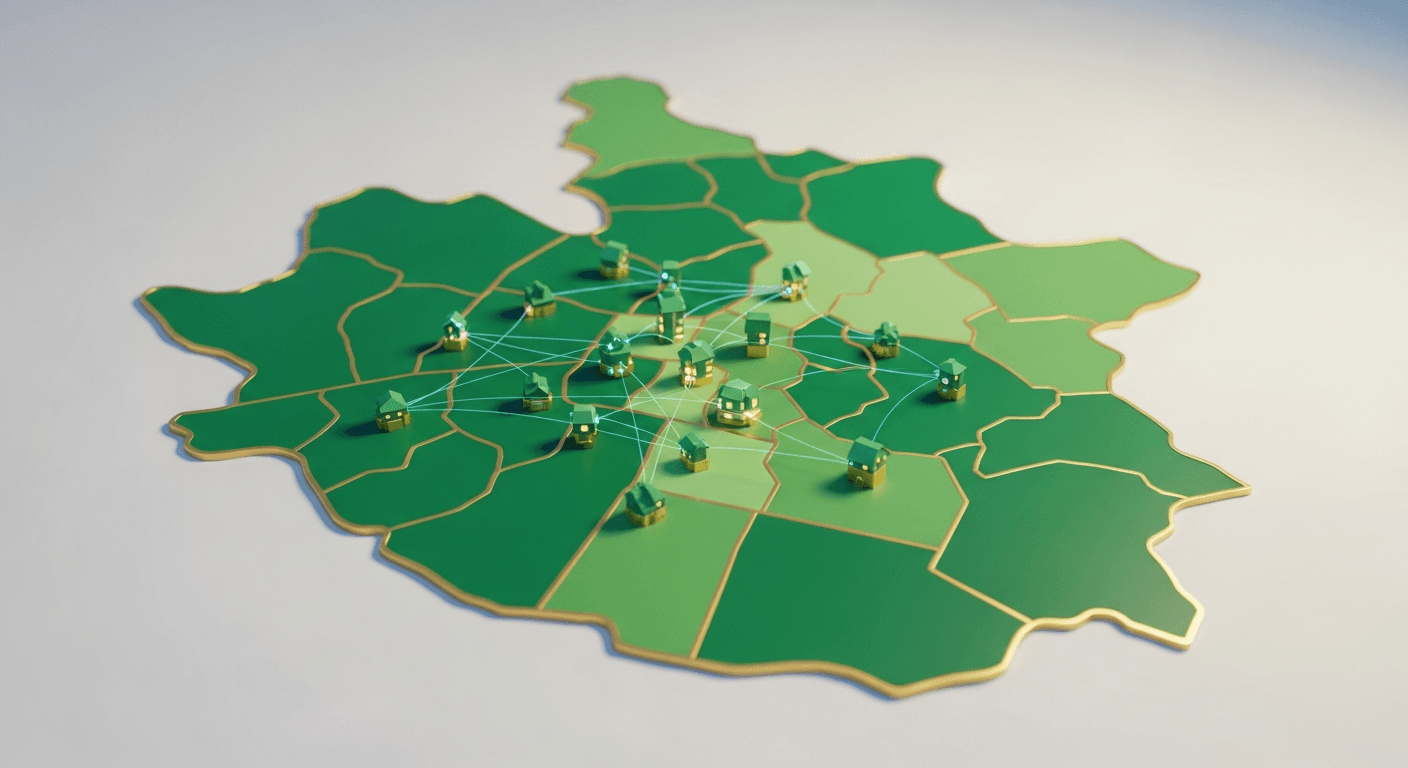
The best commercial service reps take a fundamentally different approach. They think in territories, not task lists. They study maps, identify property clusters, and plan their weeks around geography. The result is more doors knocked, more conversations held, and more contracts signed, all without working longer hours.
The Power of Density-Based Prospecting
Density-based prospecting starts with a simple observation: commercial properties cluster together. Office parks, industrial corridors, retail centers, and mixed-use districts concentrate dozens or even hundreds of potential accounts within a small radius. A rep who targets these clusters can visit five to eight buildings in a single morning instead of two or three scattered across town.
This approach multiplies selling time in two ways. First, it eliminates windshield time. Instead of driving forty-five minutes between appointments, your rep walks across a parking lot. Second, it creates natural opportunities for drop-in visits. When a scheduled meeting ends early or a prospect cancels, the rep has ten other buildings within a five-minute drive.
The most productive field sales reps do not cover more ground. They cover less ground more thoroughly.
How to Build a Territory Map
Building an effective territory map requires three layers of information: property locations, property characteristics, and your existing account footprint.
Step 1: Plot Every Commercial Property in Your Service Area
Start by mapping all commercial properties in the geographies you serve. This includes office buildings, industrial facilities, retail centers, medical complexes, multifamily properties, and mixed-use developments. A sales intelligence platform can overlay this data on a map automatically, but even a manual approach using Google Maps and county assessor records is better than no map at all.
Step 2: Overlay Property Characteristics
Not every building is a good fit. Layer in the attributes that matter for your business: square footage, property class, year built, number of tenants, and ownership type. Color-code or filter the map so your reps can instantly distinguish high-priority targets from lower-value prospects. A 200,000-square-foot Class A office tower demands a different approach than a 10,000-square-foot single-tenant retail building.
Step 3: Mark Your Existing Accounts and Competitors
Add your current customers to the map. This reveals two important patterns. First, you will see clusters where you already have a strong presence, which represent prime territory for referrals and expansion. Second, you will see gaps, areas where you serve no buildings despite high property density, which represent untapped opportunity zones.
Planning the Week Around Zones
Once your territory map is built, restructure your weekly sales schedule around geographic zones rather than account lists. Divide your territory into four or five zones and assign each zone a specific day. Monday might be the downtown office corridor. Tuesday covers the industrial parks along the interstate. Wednesday targets the suburban office campuses. This structure means your reps are never more than a few minutes from their next prospect.
Within each zone day, block the morning for scheduled appointments and the afternoon for prospecting drops. Because every building in the zone is nearby, your reps can pivot fluidly between planned meetings and opportunistic outreach without wasting time on logistics.
Route Optimization: Small Gains That Compound
Even within a geographic zone, the sequence in which a rep visits buildings matters. Planning a logical route that minimizes backtracking can save fifteen to thirty minutes per day. Over a week, that is an extra two hours of face-to-face selling time. Over a year, it translates to roughly one hundred additional prospect visits.
Modern sales tools can optimize routes automatically, but even a quick look at a map before heading out makes a meaningful difference. Start at one end of the zone and work systematically toward the other, grouping stops by proximity rather than by alphabetical order or CRM priority.
Territory Mapping Drives Better Strategic Decisions
Beyond daily execution, territory maps inform broader strategic choices. When you can visualize where your customers and prospects sit geographically, you can answer critical questions:
- Where should we hire our next rep? Place them in the zone with the highest density of unserved, high-value properties.
- Which accounts are at risk? If a competitor services three buildings in a cluster where you only have one, that account may face competitive pressure.
- Where are the expansion opportunities? A management company that oversees a dozen properties in one zone might control another fifteen in a zone you have not been working.
- How should we price? Serving multiple buildings in a tight geographic area reduces your operational costs, which can inform more competitive pricing for cluster deals.
From List-Based to Map-Based Selling
Shifting from list-based to map-based selling requires a change in habits, but the payoff is substantial. Reps who adopt territory mapping consistently report more daily prospect touches, higher meeting-to-proposal conversion rates, and less end-of-day fatigue. Managers gain visibility into territory coverage and can identify underworked zones before they become revenue gaps.
The commercial property landscape is inherently geographic. Buildings do not move, and the relationships between neighboring properties, shared ownership groups, and clustered management portfolios create natural selling opportunities that a flat spreadsheet will never reveal. The best reps already know this. The question is whether your entire team is set up to take advantage of it.
Key Takeaways
- Cluster-based prospecting multiplies daily prospect touches by eliminating drive time.
- Build territory maps with property locations, characteristics, and your existing account footprint.
- Assign geographic zones to specific days to create focused, efficient field schedules.
- Optimize visit routes within zones to recover hours of selling time each week.
- Use territory maps to drive hiring, pricing, and competitive strategy decisions.