How to Build Targeted Prospect Lists That Convert at 3x the Industry Average

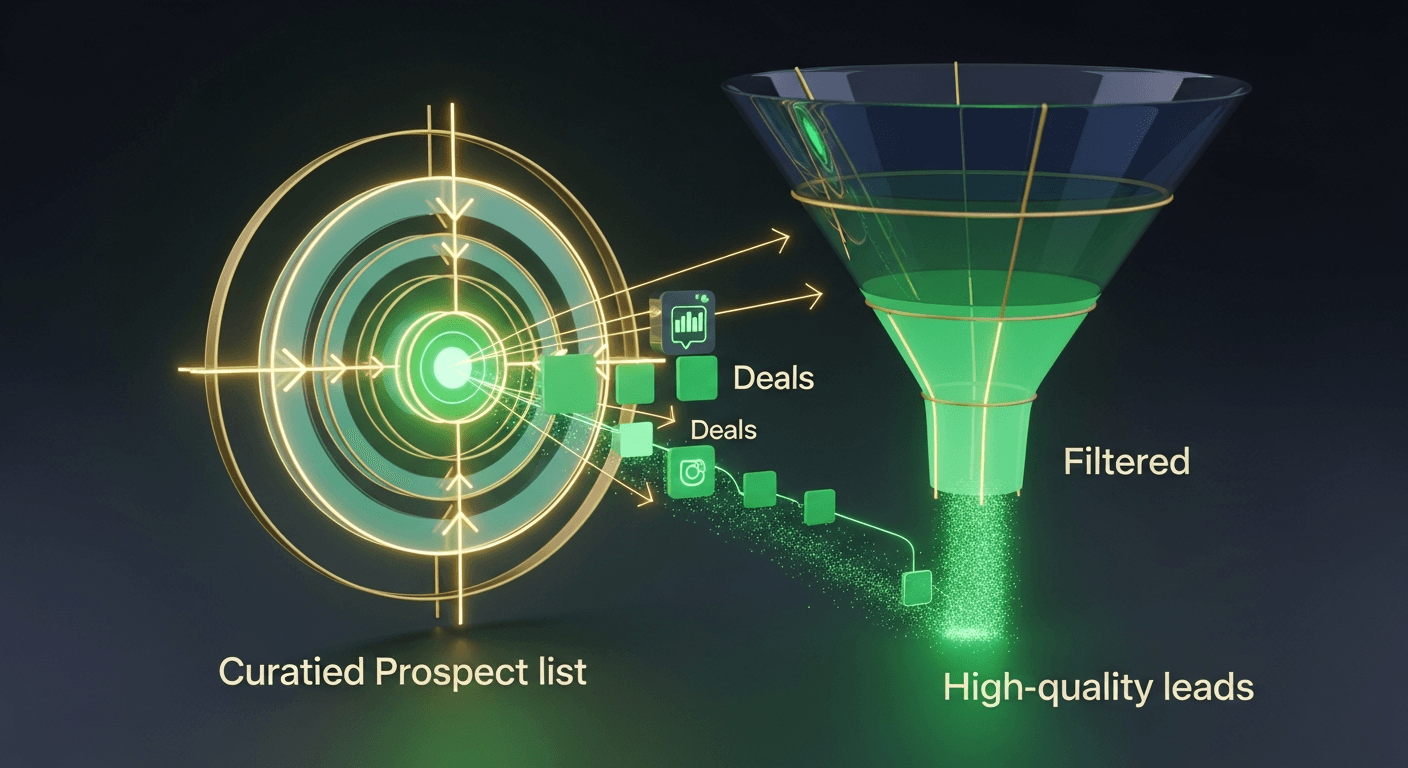
Why Most Prospect Lists Fail
The average commercial service company converts purchased lead lists at roughly 1-2%. That means for every 100 contacts your reps dial, 98 go nowhere. The problem is not your team's sales skills — it is the list itself. Generic lead databases dump thousands of names into your pipeline with no context about the properties those people manage, the services those buildings actually need, or whether the contact information is even current.
Companies that build targeted, property-informed prospect lists routinely see conversion rates of 5-7% — three times the industry average. The difference is not magic. It is method.
Step 1: Define Your Ideal Customer Profile With Property Data
Every sales methodology starts with an Ideal Customer Profile, but most commercial service companies define theirs too broadly. "Office buildings over 50,000 square feet in Dallas" is a start, but it leaves out the characteristics that actually predict a sale.
A strong ICP for commercial services includes:
- Property type — office, retail, industrial, medical, multifamily
- Square footage range — the sweet spot where your pricing and capabilities align
- Year built or last renovated — older buildings need more services
- Building systems — HVAC type, roof type, elevator presence
- Ownership structure — management companies, REITs, and multi-property owners often buy differently than individual landlords
- Geography — not just city, but specific submarkets where you can service efficiently
The more specific your ICP, the shorter your list — and that is the point. A list of 200 precisely matched properties will outperform a list of 2,000 loosely matched ones every time.
Step 2: Use Property Filters to Build Your List
Once your ICP is defined, the next step is translating it into filters. A platform like Greenfinch lets you search commercial property databases using the exact criteria above — square footage, year built, building type, ownership entity — and export a clean list of matching properties with associated contacts.
Here is what a practical filtering workflow looks like for a commercial HVAC company:
- Filter to office and retail properties between 20,000 and 150,000 square feet
- Narrow to buildings constructed before 2005 (likely needing system upgrades)
- Select target ZIP codes within your service radius
- Exclude properties you already have under contract
- Sort by assessed value to prioritize higher-revenue opportunities
The result is a list where every entry has a defensible reason for being there. When a rep picks up the phone, they can say: "I noticed your building on Elm Street was built in 1998 — most properties of that age are due for an HVAC assessment." That is a conversation starter, not a cold call.
Step 3: Verify and Enrich Every Contact
A property list is only half the equation. You also need the right person to call. This is where most list-building processes break down.
"We used to spend two days a week just figuring out who to call at each building. Half the time the phone number was wrong anyway." — Sales rep, commercial landscaping company
Contact verification should happen before a name ever reaches your CRM. For each property on your list, you need:
- The decision-maker's name and title — property manager, facility director, building owner
- A verified phone number — not a main office line, but a direct or mobile number
- A verified email address — checked for deliverability, not just format
- The relationship to the property — do they own it, manage it, or lease it?
Platforms that combine property data with contact intelligence eliminate the manual research step entirely. Instead of toggling between county records, LinkedIn, and your CRM, you get a single enriched record per property.
Step 4: Segment for Personalized Outreach
A targeted list is not a single list — it is multiple micro-lists, each tailored to a specific outreach angle. Segmentation lets your reps personalize messaging at scale without writing a unique email for every prospect.
Common segmentation strategies for commercial services:
- By property age — older buildings get messaging about upgrades and compliance; newer buildings get preventive maintenance pitches
- By portfolio size — multi-property owners respond to volume pricing and master service agreements
- By submarket — reference local developments, zoning changes, or weather events that create urgency
- By decision-maker role — property managers care about vendor reliability; owners care about cost and ROI
Step 5: Maintain Your Lists Like a Living Asset
The biggest mistake teams make after building a great list is treating it as a one-time project. Commercial property ownership changes constantly — buildings sell, management companies turn over, tenants vacate. A list that was accurate in January can be 15-20% stale by June.
Best practices for ongoing list management:
- Re-verify contact data quarterly at minimum
- Flag ownership changes and reassign records to the correct rep
- Remove converted customers and replace them with fresh prospects
- Track which segments convert best and double down on those filters
- Feed conversion data back into your ICP definition — let results refine your targeting
The 3x Formula
There is no single trick that triples your conversion rate. The 3x comes from compounding small advantages at every step: a tighter ICP means fewer wasted calls, property filters mean every prospect is relevant, verified contacts mean reps actually reach someone, segmentation means the message resonates, and list maintenance means the data stays fresh. Stack all five and you do not just beat the industry average — you redefine it for your team.